
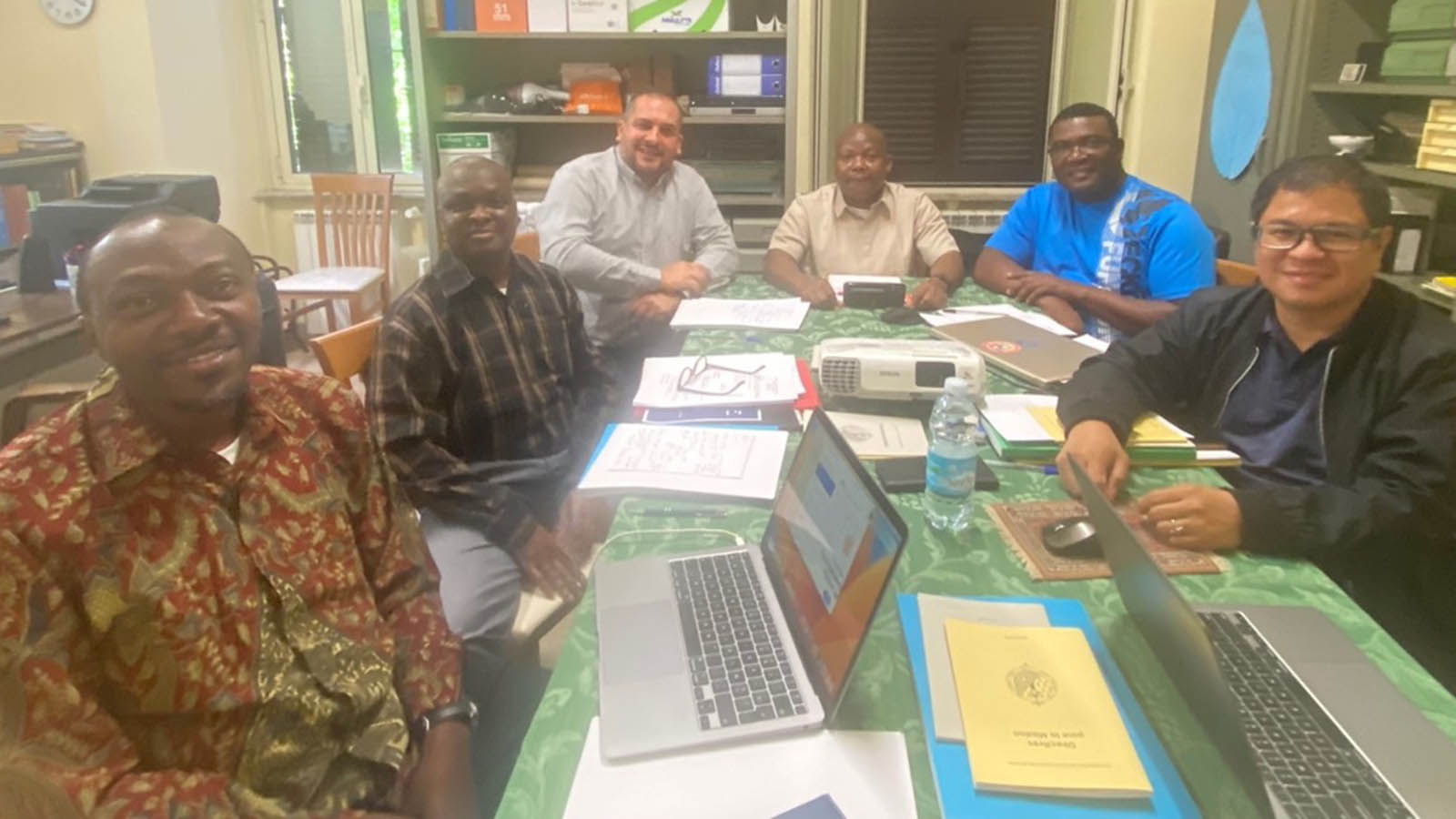
From April 30 to May 4, 2024, the General Committee for Mission (CGM) met at the Collegio CICM in Rome. All five members of the Committee - Márcio Flávio Martins, Constantin Konyi, John Mallare, Ghislain Toussé, and Charitable Dérisseau - actively participated in the session.
During the meeting, the Committee analyzed nine missionary projects (8 provinces and Malawi) that were aligned with the universal church and communion with all the CICM provinces. The session commenced with a speech by Father General Charles Phukuta, followed by contributions from four speakers.
Father General emphasized the importance of being consistent missionaries and encouraged a new dynamic of creativity and missionary daring to revitalize the pioneering spirit of the Institute. Other speakers shed light on the new paradigm and recent developments in missiology, emphasizing the need for openness and conversion in the way the mission is conceived and carried out.
Antonio Pernia and Stanislaus Lazar, both SVD missionaries, spoke about the current state of mission and interculturality. Father Gerard Nzazi Liufa presented his reflection on "Being a missionary at the service of the Kingdom of God: Pilgrim of reconciliation towards the fullness of the Kingdom in the DRC." Mr. Roberto Catalano elaborated on the theme of "mission and inter-religious dialogue."
The focus of the meeting, the first of its kind after the 16th General Chapter, was to consider the Chapter's recommendations on mission and analyze the missionary projects in light of the guidelines set out in Vade-Mecum B. The Commission provided valuable observations and suggestions to help the Provinces better develop their missionary projects to respond to the challenges of our time.
The analysis of mission projects was based on the spirit of the directives for the mission, following the decree of the 14th General Chapter creating the General Committee for Mission and the 15th General Chapter recommending the practice of six-year strategic planning for monitoring and evaluation of the realization of mission projects at all levels.
Today, the mission is multidirectional in a polycentric Church, where local Churches are increasingly becoming the first subjects in the dynamic of "giving and receiving." First and foremost, "Missio Dei" is carried out in dialogue with peoples and cultures to foster true disciples of Jesus.
This common orientation needs to be adopted by all the provinces following the 16th General Chapter. The feedback from the Committee aims to raise awareness of the new missionary paradigm (Missio inter gentes), a significant step in this time of synodality, to better serve the Churches in whose midst we live and share today's mission.
- General Committee on Mission
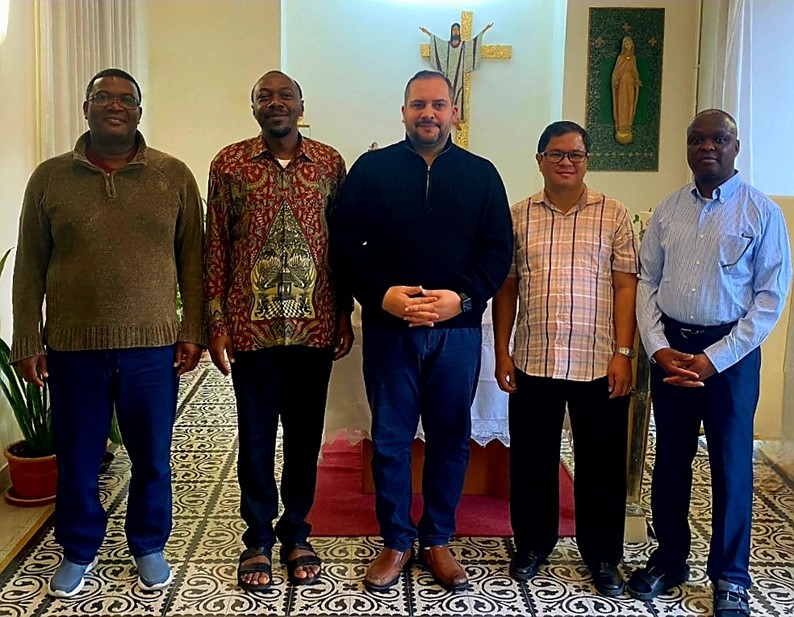
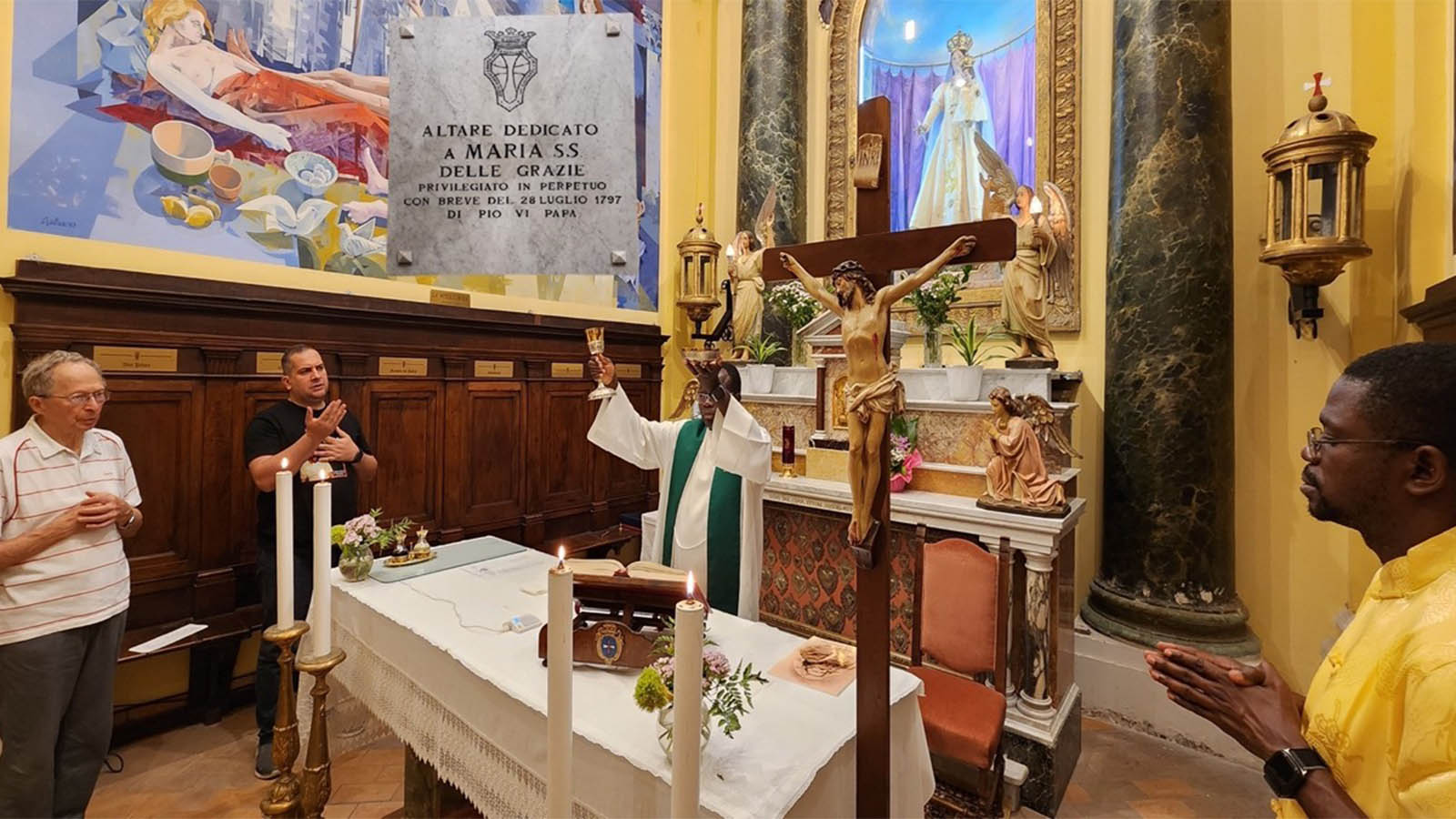
Le 12 juin 2024, quelques membres (André De Bleeker, Márcio F. Martins, Roger Nshono, Amos Onezaire et Renillo Sta. Ana) de la Communauté du Généralat CICM à Rome ont organiséune commémoration spéciale pour le 201ème anniversaire de naissance du Père ThéophileVerbist à l'église Stella Maris, dédiée à Notre Dame des Grâces à Civitavecchia près de Rome. Le Père Verbist avait une dévotion particulière pour Notre Dame de Grâce, la même patronne titulaire que celle de la chapelle de CICM à Scheut.
Symbole de l’abandon total à la Providence divine
En ce jour du 201ème anniversaire de la naissance de Théophile Verbist, nous avons le privilège de nous rassembler en ce lieu historique pour notre famille religieuse. Je remercie les confrères qui ont eu l’idée de nous aider à marcher sur les pas de notre Fondateur et ses premiers compagnons. Dans la brochure parue à l’occasion du Bicentenaire de sa naissance intitulée « Théophile Verbist, Fondateur de CICM (Scheut), nous apprenons qu’ils quittèrent Scheut le vendredi 25 août 1865 à 14h 30. Du 3 septembre au 13 septembre, ils séjournèrent à Rome. C’est donc le 13 septembre 1865 qu’ils prirent le bateau en ce lieu où nous nous trouvons : de Civitavecchia vers Marseille. M’inspirant des lectures bibliques de ce jour, je vous propose deux méditations tirées de l’expérience spirituelle de notre Fondateur : la foi inébranlable en la Providence divine et sa bonté dans ses relations.
La vie d’un homme sur cette terre ressemble à un vaste champ de bataille. En lisant l’histoire de Théophile Verbist, nous comprenons qu’il a été confronté à de rudes épreuves, des moments de découragement et d’incompréhension. Sa force résidait dans la foi en la Providence divine. Il a combattu le bon combat face aux forces des ténèbres, convaincu que les forces spirituelles doivent être supérieures aux forces physiques. Dans la première lecture, nous avons compris que les serviteurs de Dieu sont souvent confrontés à des combats difficiles sur cette terre. Le prophète Elie, par sa foi inébranlable en Dieu, a prouvé que Dieu est plus fort, et que la victoire finale appartient à ceux qui le craignent. La foi en Dieu nous donne un regard nouveau sur nos semblables. L’homme de foi croit que les êtres humains créés à l’image de Dieu méritent amour, respect et considération.
« Avant d’écrire une lettre, trempez votre stylo dans votre propre cœur » était une des expressions souvent utilisées par Théophile Verbist dans ses lettres. Le cœur est le siège de la bonté. L’histoire nous rappelle que la bonté était l’une de ses caractéristiques. Ce fut sa force aux moments les plus critiques de sa vie. La bonté est la qualité de celui qui fait preuve de bienveillance active envers autrui, une activité efficace susceptible de rendre l’autre réellement heureux. Il voulait réellement être heureux et rendre les autres heureux. Il ne sert à rien de gaspiller nos énergies à haïr les autres.
La bonté est une valeur en crise dans notre monde d’aujourd’hui. La vie de Théophile Verbist est une vie totalement donnée pour la mission, spécialement pour les plus petits. Il a enseigné et observé les plus petits commandements, dans les plus petits détails de la vie. Il aimait ses compagnons, il leur voulait du bien.
Chers confrères, Théophile Verbist a fondé une famille religieuse à laquelle nous sommes fiers d’appartenir. Soyons heureux d’être frères, appelés à la même vocation ; une famille de frères qui s’aiment et savent se pardonner, qui se comprennent et se veulent du bien. Une des maladies de notre monde d’aujourd’hui est la recherche de sa sécurité personnelle, de ses propres avantages, des relations avec les gens de son pays d’origine, de sa tribu… Malheureusement, cette maladie n’épargne pas notre Eglise et notre Congrégation. Notre fondateur mettait l’homme au centre de son action, de quelle qu’origine qu’il soit. Pour lui, la loi était au service du salut des âmes. Sa loi par excellence était l’amour. C’est pour cette raison qu’il fut touché par le « Cor unum et anima una », une devise qu’il s’appropria lors de son passage à Paris chez les Spiritains.
Le secret de la longévité de CICM réside dans l’amour que nous avons les uns envers les autres, dans la bienveillance, en nous enracinant dans les valeurs de l’Evangile, dans le désir de voir les confrères progresser, dans l’amour pour la mission, même au prix de sacrifices. Civitavecchia nous rappelle que l’aventure missionnaire ne va pas sans sacrifices. Ce lieu est donc pour nous un symbole de détermination, du goût de l’aventure, des sacrifices et de l’abandon à la Divine Providence. Il symbolise la sortie de la zone de confort pour se tourner vers l’inconnu, où la seule sécurité est en Dieu. Ici, Théophile Verbist laissa sa chère terre européenne où il ne reviendrait plus jamais.
- Roger Nshono
On June 12, 2024, some members (André De Bleeker, Márcio Martins, Roger Nshono, Amos Onezaire, and Renillo Sta. Ana) of the CICM Generalate Community in Rome held a special commemoration for the 201st Birth Anniversary of Fr. Théophile Verbist at the Church of Stella Maris, dedicated to Our Lady of Graces in Civitavecchia near Rome. Fr. Verbist had a special devotion to Our Lady of Grace, the same titular patroness as the one in the CICM chapel in Scheut.
A symbol of complete surrender to Divine Providence
As we commemorate the 201st anniversary of Théophile Verbist's birth, we find ourselves in this historic place for our religious community. I want to express my gratitude to the confreres who proposed retracing our Founder's journey and that of his first companions. In a publication titled "Théophile Verbist, Founder of the CICM (Scheut)," released for the Bicentenary of his birth, we learn that on Friday, August 25, 1865, at 2:30 pm, they departed from Scheut. Subsequently, from September 3 to September 13, they resided in Rome. Therefore, on September 13, 1865, they embarked on their voyage to Marseilles from Civitavecchia, where we are presently gathered. Drawing inspiration from today's Bible readings, I share two meditations from our Founder's spiritual journey: unwavering faith in Divine Providence and kindness in his interactions with people.
Life on this earth is often filled with turbulence and challenges, resembling a battlefield. When we reflect on Théophile Verbist's story, we are deeply moved by his unwavering resilience in the face of adversities, moments of despair, and misunderstandings. His steadfast faith in Divine Providence was his unwavering anchor amid these trials. He fought bravely, resolute in believing that spiritual forces outweigh physical ones. The first reading emphasizes that God's servants frequently encounter daunting battles on earth. The prophet Elijah, through his unshakeable faith in God, demonstrated the supremacy of God and that the ultimate triumph belongs to those who revere Him. Faith in God gives us a fresh perspective on our fellow human beings. People of faith recognize the inherent worth of human beings created in God's image and advocate for love, respect, and consideration toward them.
"Before writing a letter, dip your pen in your own heart" - a phrase frequently used by Théophile Verbist in his correspondence. The heart is the abode of goodness. History reminds us that kindness was one of his defining traits, serving as his strength during the most critical junctures of his life. Kindness embodies active benevolence towards others, a potent force capable of bringing genuine happiness to others. He sought his own happiness and endeavored to spread joy to others. There is no benefit in squandering our energy to harbor animosity towards others.
Kindness is a value undergoing a crisis in our present world. Théophile Verbist's life was fully dedicated to the mission, especially for the most vulnerable. He taught and exemplified the smallest commandments in the minutest aspects of life. He cherished his companions and desired goodness for them.
Dear confreres, Théophile Verbist established a virtuous religious community, a family in which we are not merely members but a family we are proud to be part of. Let us rejoice in our shared vocation; let us be a family of brothers who love, forgive, understand, and wish the best for one another. Pursuing personal security, status, or the interests of one's nation or tribe is a prevailing ailment in our contemporary world. Regrettably, this ailment has not spared our Church and our Congregation. Our Founder placed people at the center of his work, irrespective of their backgrounds. For him, the law served the salvation of souls, and his ultimate law was love. It was the motivation behind his embrace of Cor unum et anima una, a motto he encountered during his time with the Spiritans in Paris.
The enduring strength of CICM lies in our love for one another, our goodwill, our foundation in Gospel values, our desire to witness the progress of our confreres, and our love for the mission, even at the cost of sacrifice. Civitavecchia serves as a poignant reminder that the missionary journey is not devoid of sacrifice. This place signifies determination, a spirit of adventure, sacrifice, and complete trust in Divine Providence. It represents the willingness to depart from our comfort zones and face the unknown, where the sole source of security is in God. Here, Théophile Verbist was leaving behind his beloved European homeland, never to return.
- Roger Nshono
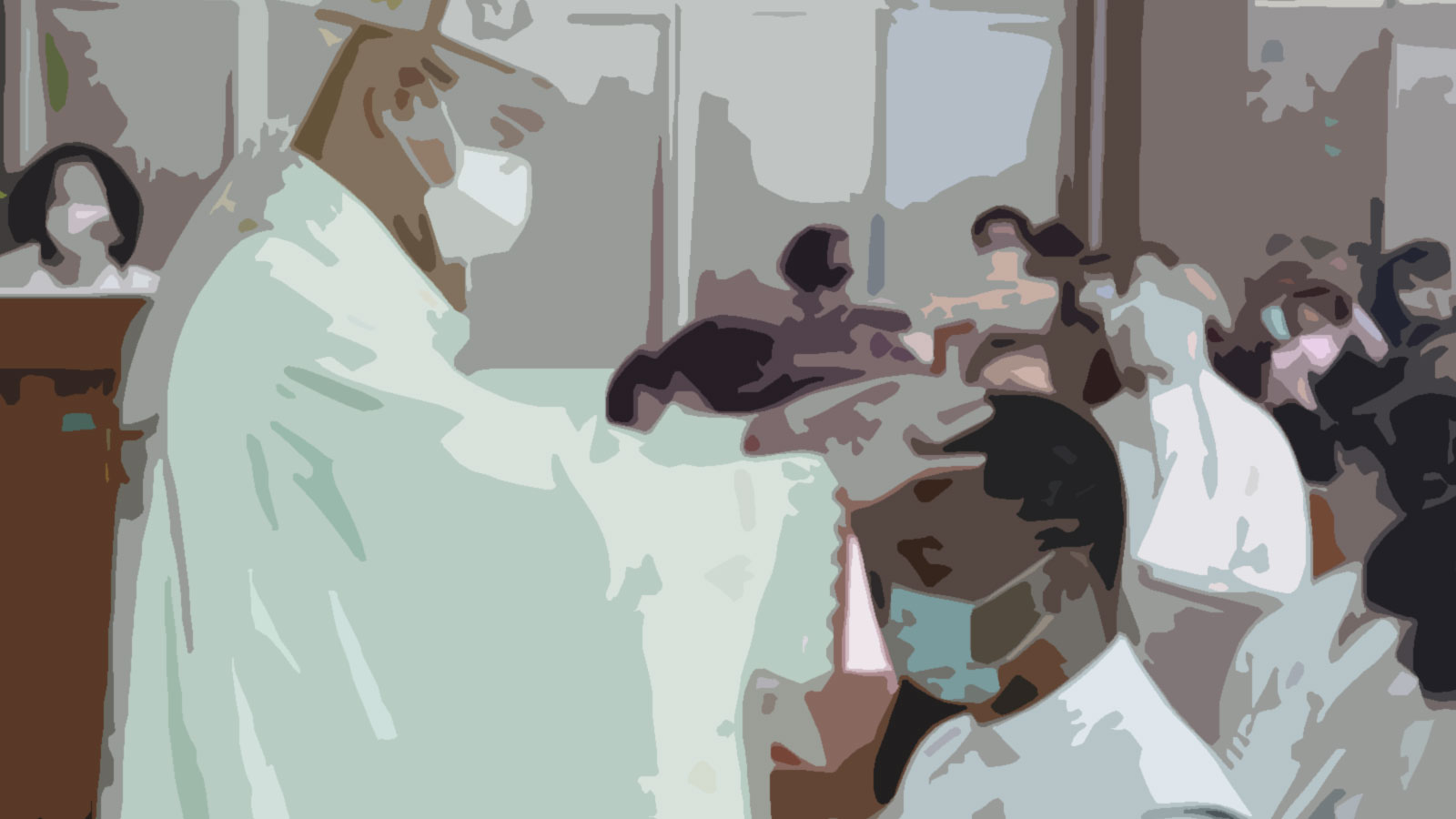
Nsenda Nkashama Olivier (AFA) a été ordonné prêtre le 06 juin 2024, par Mgr Félicien Mwanama, évêque de Luiza, à la paroisse universitaire Saint Marc de Kananga, RD Congo.
Senapaï Tang-Yine Jerry-Junior (BNL) a été ordonné prêtre le 27 janvier 2024, par Mgr Faustin Ambassa Ndjodo, archevêque de Garoua, à la Paroisse Saint-Pierre, Apôtre de Messamendongo-Yaoundé, Cameroun.
Nsenda Nkashama Olivier (AFA) was ordained priest on January 06, 2024, by Most Reverend Felicien Mwanama, Bishop of Luiza, at the University Parish Church of Saint Marc de Kananga, DR Congo.
Senapaï Tang-Yine Jerry-Junior (BNL) was ordained priest on January 27, 2024, by Most Reverend Faustin Ambassa Ndjodo, Archbishop of Garoua, Paroisse Saint-Pierre-Apôtre de Messamendongo-Yaoundé, Cameroon.